Our Blogs
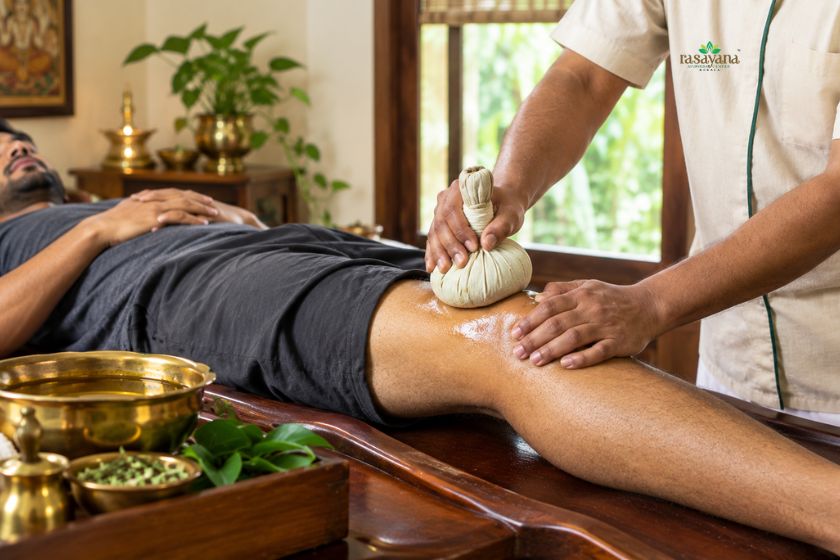
Ayurvedic treatments encompass a wide range of therapies and modalities. Here are some of the commonly practiced types of Ayurvedic treatments:
.jpg)
Why Mumbai’s Busy Professionals Are Heading to Kerala for Spine Care
If you live in Mumbai, you’re used to the grind. But your back isn’t. Between the hours spent sitting in traffic on the Link Road and the high-pressure environment of a 9-to-5 (which is usually a 9-to-9), chronic back pain has quietly become part of the job.
Most people in the city start with physiotherapy or a quick strip of painkillers. But when the pain keeps coming back or when a doctor starts mentioning the word “surgery,” that’s when the conversation often shifts toward Kerala. An Ayurvedic treatment for back pain in Kerala begins to feel less like a lifestyle choice and more like a practical healthcare decision.
Ayurvedic Treatment for Back Pain in Kerala
One of the biggest misconceptions is that people come to Kerala for a relaxing spa experience. That might be true for tourists. It’s not true for professionals dealing with sciatica, slipped disc symptoms, or chronic spinal pain.
In Kerala, Ayurvedic spine care is structured and clinical. When someone goes through panchakarma treatment, it’s not something you “try once and see how it feels.” It becomes part of your daily routine. The body changes slowly - inflammation settles, circulation improves, the nervous system starts to calm down, and the spine finally gets space to recover instead of being constantly pushed.
What it actually looks like day to day:
- You are doing treatment every day, not once in a while
- Your routine stays the same so the body can settle into it
- Therapies are chosen based on what’s wrong with you, not a preset plan
- Medicines and external treatments work together
- Food is simple and controlled because healing needs discipline
- You are checked regularly, not just seen once and forgotten
- The focus is on slow improvement, not instant results
It’s not about feeling good for an hour. It’s about giving your body enough consistency and time to actually repair itself.
Why Mumbai Clinics Aren’t the Same
Mumbai has good doctors and good therapists. The limitation isn’t skill - it’s structure and environment.
Spine healing needs time, routine, mental rest, physical stillness, and a calm nervous system. City life doesn’t allow that. Treatments are squeezed between meetings, stress remains constant, sleep is disrupted, and recovery never becomes the priority.
Kerala offers a completely different ecosystem for healing.
What Kerala provides that metros can’t:
- Slower pace of life
- Reduced stress triggers
- Healing-friendly climate
- Residential treatment systems
- Continuous care environment
- Space for nervous system recovery
- Routine-driven lifestyle
This creates the conditions where treatment can actually work.
The Difference Between Pain Relief and Spine Recovery
Most urban treatments are built around controlling pain, not fixing the cause. Medication, physio, exercises, and even injections can take the edge off the pain, but they usually don’t break the pattern that keeps the spine getting worse.
That’s where Ayurvedic treatment for back pain in Kerala feels different. The spine isn’t treated as a single broken part that needs fixing. It’s treated as part of a body that’s under strain -physically, mentally, and metabolically and the treatment works on all of it together, not in isolation.
Most pain-focused treatments usually look like this:
- Medication to control inflammation
- Physiotherapy to manage movement
- Exercises for strength and stability
- Injections when nerve pain gets worse
- Short-term symptom control
A recovery-focused approach looks more like this:
- Finding what’s actually causing the damage
- Bringing inflammation down naturally
- Supporting nerve healing
- Releasing chronic muscle tension
- Improving circulation
- Correcting daily habits and posture
- Working toward long-term function, not quick relief
Why Panchakarma Isn’t Optional for Chronic Back Pain
Long-term spine problems usually don’t come from one bad movement or one injury. They form gradually, as stress, bad routines, poor sleep, inflammation, nerve strain, and lifestyle habits slowly wear the body down. By the time the pain becomes constant, the problem is already deep-rooted.
That’s why Panchakarma isn’t treated as an “extra” in spine care. It becomes part of the foundation. It works from the inside, changing the conditions that keep pain returning, instead of just managing the pain itself.
What Panchakarma supports:
- Reduction of chronic inflammation
- Detoxification of metabolic toxins
- Improved blood circulation
- Nervous system calming
- Deep muscular relaxation
- Tissue nourishment
- Long-term pain reduction
- Functional spine recovery
It works internally, not just externally - which is why results tend to be more stable.
The Reality of the “Time” Problem
For most Mumbai professionals, the biggest barrier isn’t belief - it’s time. Taking 14 or 21 days off feels impossible.
But the alternative is usually worse:
- Months of repeated physiotherapy
- Recurring pain cycles
- Increasing medication dependence
- Productivity loss
- Long-term physical limitations
- Eventual surgery and recovery downtime
Taking a couple of weeks to heal properly can save you years of problems later. It’s a practical investment in physical function.
What People Actually Experience
People don’t return talking about therapies. They talk about everyday changes:
- Better sleep
- Less stiffness
- Easier movement
- Improved sitting tolerance
- Reduced daily pain
- Better work focus
- Improved energy levels
The goal isn’t luxury. The goal is function.
Where Rasayana Fits In
This is where centres like Rasayana Ayurveda Centre fit naturally into the picture - not as wellness resorts, but as treatment-focused centres.
Their approach is built around:
- Doctor-led diagnosis
- Structured spine treatment protocols
- Supervised Panchakarma programs
- Residential recovery systems
- Chronic pain management
- Personalised therapy planning
- Long-term recovery focus
For professionals, this matters because spine care is not about one therapy - it’s about structure, systems, and continuity.
Why Kerala Keeps Attracting Mumbai Professionals
Mumbai treats back pain as a condition to manage. In Kerala, they treat it as a system imbalance to fix. One focuses on relief. The other focuses on recovery.
For professionals who are fed up with short-term solutions and recurring pain cycles, Kerala provides a systematic, non-surgical, long-term approach to recovery that doesn’t rely on continuous medication or surgery.
This is why Ayurvedic spine care in Kerala is not only gaining popularity but also attracting professionals who want their bodies back, not just their pain managed.
.jpg)
.png)