Our Blogs
Ayurvedic treatments encompass a wide range of therapies and modalities. Here are some of the commonly practiced types of Ayurvedic treatments:
.jpg)
Why Knee Pain is Increasing Among People in Singapore: Causes & Natural Solutions.
“The prevalence of KOA in Singapore has nearly doubled over the past few decades, from 4.52% in 1990 to 8.83% in 2019 and continues to rise, imposing significant challenges to the healthcare system and the economy”
- Osteoarthritis & Cartilage journal –
According to a survey conducted by the Osteoarthritis and Cartilage journal in 2025, the prevalence of knee osteoarthritis in Singapore has grown exponentially over the years, increasing from 4.52% in 1990 to 8.83% in 2019. What could possibly cause this, and what can we do about it? At Rasayana, we have dealt with numerous patients from Singapore and other Asian countries who came in search of Ayurvedic treatment for Knee pain in Kerala.
A City That Never Sleeps – Does Our Knees Cope With it?
Singapore is a wonderland or a futuristic city. Everything about it is efficient, interconnected, and constantly on the move. However, it's the very nature of life in such a metropolitan city which is causing its residents an invisible problem, taking a toll on the joints' health.
Knee pain, specifically in Singaporean citizens, tends to become more prevalent starting from the age of 40 onwards. The studies have revealed the fact that knee problems are common among Indians, while Malay and Chinese Singaporeans come second in line. In recent years, more and more citizens of their 30s have begun complaining about their knees.
These are the main factors causing the problem:
1. The Sedentary Trap
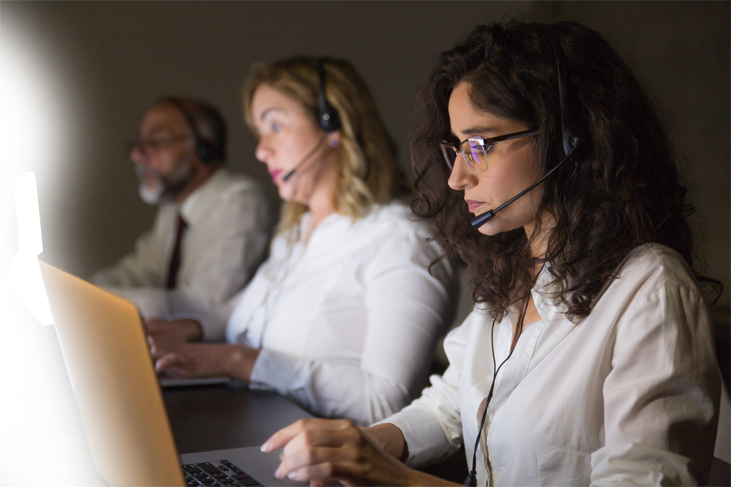
A lot of Singaporeans tend to spend most of their work time sitting at their desks, attending meetings and commuting. Lack of use of the muscles surrounding the knee results in muscle weakness. Muscle weakness causes the knee joint to absorb more stress than it normally would, leading to rapid degeneration. Eventually, the degeneration leads to osteoarthritis. This is not laziness but the nature of city work itself. However, the human body was never built to sit for 8 hours straight. If such a practice is done frequently, it will make condition worse over time.
2. Body Mass and the Stress Exerted on Joint Ligaments
One additional kilogram of body mass equates to an additional four kilograms of pressure on the knee when walking. A Singaporean resident includes substantial amount of carbohydrate in their everyday diet. With increasing levels of obesity in Singapore, a phenomenon experienced by other highly developed countries, knee-related issues are likely to become increasingly prevalent. Numerous studies have already documented how excessive weight contributes to cartilage wear, joint inflammation, and its premature need for intervention.
3. Aging Population
With Singapore being one of the fastest aging populations in all of Asia, there is no doubt that the degeneration of cartilage, which serves as a lubricant between joints within the knee, will become a health concern for more people. Most knee pains in elderly patients result from osteoarthritis, a condition that is expected to affect twice as many individuals as today in the future.
4. Exercise Overuse via High-Impact Exercises
Too much exercise is not healthy for the knee. Weekend athletes, people who work sedentarily during the weekdays and engage in high-impact exercises during the weekends such as running, playing football, and working out in gyms, have a greater risk of being affected by the knee pain. Poor conditioning in the joint subjected to sudden activities results in tendinitis, strained ligaments, and meniscal tears. The recreational sports culture in Singapore makes the situation worse.
5. Footwear, Floor Surfaces, and Urban Infrastructure
Marble tiles in malls, hard concrete surfaces, and prolonged use of footwear that offers little support – all these are hidden dangers. Standing continuously for long hours on such surfaces, a common occupational hazard, leads to repetitive impacts to the knee joint over time.
6. Dietary Factors Leading to Inflammation
An unhealthy diet consisting of fast foods and refined foods increases inflammation within the body and thereby affects joints. Even though one can get healthy food in Singapore, but the trend nowadays, particularly among young adults, is to eat a lot of hawker food, which is full of salt and other ingredients that promote inflammation in the body.
Knee Pain – Ayurvedic perspective
The Indian medical science of Ayurveda, dating back about 5,000 years, addresses knee pain from the perspective of Sandhivata. This term refers to the disorder that results from an aggravated state of the biological energy Vata, which regulates the processes of degeneration and movement. When this dosha is disturbed, it drains the synovial fluid, dries up the cartilage which further results in arthritis.
Contrary to symptom-focused treatment, specifically, knee pain treatment in Kerala tries to treat the disease at its roots by balancing doshas, rejuvenating damaged tissues, and ridding the body of toxins (ama).
Ayurvedic Solutions For back Pain
Guests that visit Rasayana Ayurveda Centre, Kochi, from Singapore and Southeast Asia carry many years of untreated joint pains with them. In our centre, these conditions are treated as follows:
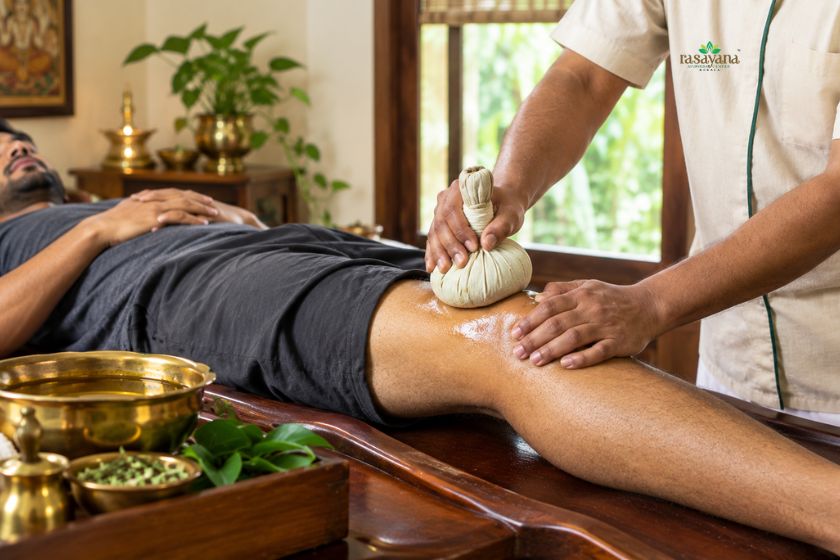
1. Janu Basti treatment is one of the most widely recognized treatments of Ayurveda for relieving knee & joint pains. Warm oil, usually prepared with Mahanarayana Taila or Ksheerabala Taila medicines is poured onto the joint inside a dough ring and kept there for an extended period. This causes the oil to get deeply soaked in the tissues, reducing stiffness and nourishing the joint cartilages. For chronic knee pains, the recommended number of sessions ranges from 14 to 21 days.
2. Abhyanga, or therapeutic massage with warm oils, is a treatment technique designed to improve blood circulation in the joint region, relax tensed muscles and bring back the balance of aggravated Vata Dosha. Performed by professional therapists, this procedure is both relaxing and very powerful from the Ayurvedic perspective.
3. Panchakarma treatments, which comprise the detoxification process of Ayurveda, heal the underlying conditions. Among other treatments, Virechana (therapeutic purging) and Basti (enemas with medicinal oil) show high effectiveness.
4. Patrapinda Sweda includes the use of warm poultices consisting of herbal leaves applied on the joints to relieve pain, stiffness, and inflammation thereby improving the joint movement.
5. Herbs — Herbs like Ashwagandha, Shallaki (Boswellia), Guggulu, and Turmeric which have proven efficacy against inflammation and in promoting the health of cartilages are prescribed as per the body constitution (prakriti) of the body and stage of disease development.
6. Advice Regarding Diet and Lifestyle — In Ayurveda, food and daily lifestyle habits hold utmost importance (Ahara and Vihara). Eating easily digestible food, avoiding cold and raw foods, practicing light yoga exercises, and having a proper sleeping schedule are important for maintaining balance in Vata and health of joints.
Why You Should Choose Rasayana?
Our clients come from Singapore, Malaysia, and other parts of Southeast Asia all the way to the Rasayana Ayurveda Centre in Kochi for an in-residence treatment program. With Dr. V. Madhavachandran, who is our Chief Ayurvedic Physician with more than three decades of professional experience, we ensure that every client gets a customized treatment plan based on their unique diagnosis, lifestyle and personal requirements. Rasayana is a certified NABH Ayurvedic hospital, so rest assured that our services meet the strictest standards of excellence and safety. Insurance claims are also possible for those qualified. After decades of bearing the weight of your life, your knees need some rest and care.
For all clients suffering from knee pains, we encourage you to reach out to us by booking an appointment through our official websites or contact through provided telephone/mobile phone numbers.
.jpg)
.png)