Our Blogs
Ayurvedic treatments encompass a wide range of therapies and modalities. Here are some of the commonly practiced types of Ayurvedic treatments:
.jpg)
Painkillers vs Ayurveda for Knee Pain: A Better Choice
If your knees have started aching, your first instinct is probably to reach for a strip of painkillers. It makes sense because life doesn't stop just because your joints do. You have a busy schedule, and you just want the pain to go away so you can get through the day. But here’s the problem: that little pill doesn't actually know your knee is damaged. It just tells your brain to stop listening to the pain signals. Meanwhile, the underlying issue, the wear and tear, the lack of lubrication, or the inflammation is still there, quietly getting worse. If you are tired of this cycle, it’s worth looking at why a specialized Ayurvedic hospital in Kochi might offer a more permanent solution than your local pharmacy.
The Painkiller Trap
Painkillers (NSAIDs) are great for emergencies, but using them as a long-term strategy for knee pain is risky. Aside from the potential side effects like acidity or kidney strain, they create a false sense of security. Because you don’t feel the pain, you might continue to put pressure on a joint that actually needs rest and repair.
In Ayurveda, we see knee pain (especially conditions like Osteoarthritis) as a depletion of the "Sandhivata." This is basically the drying up of the protective fluid in your joints. When that fluid goes, bone rubs against bone. A painkiller can’t put that fluid back, but a structured Panchakarma treatment can.
Who May Consider Ayurvedic Treatment for Knee Pain
Ayurvedic treatment is often considered by people who feel stuck in the cycle of temporary relief. If you depend on painkillers regularly just to get through the day, it may be time to look at a more structured approach. It can also help people with stiffness in the morning, discomfort while walking, or knee pain that returns again and again. Many people with age-related wear and tear or early osteoarthritis look for options that focus on long-term mobility.
If knee pain is affecting stairs, sleep, travel, or confidence in movement, professional care becomes worth considering.
The Power of Panchakarma for Knees
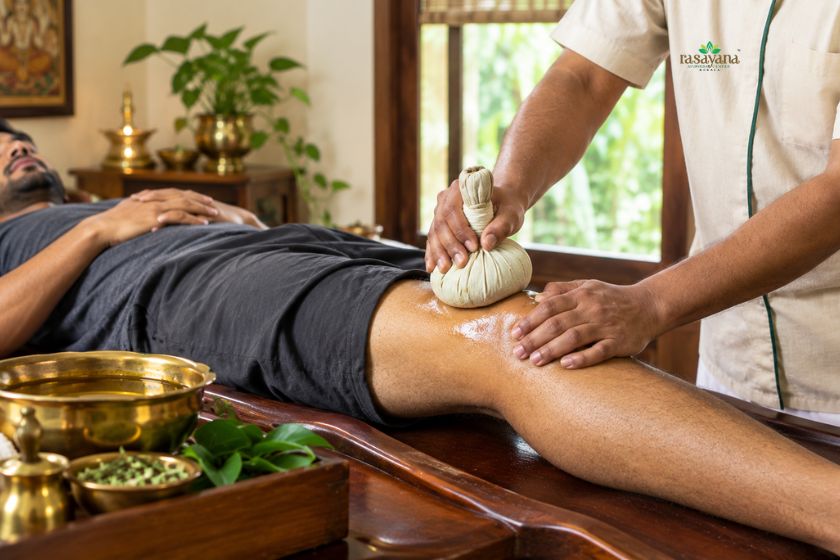
If your knee pain has reached a stage where it’s affecting your walk or keeping you up at night, a simple ointment isn't enough. You likely need a full Panchakarma treatment.
Panchakarma is essentially a deep-cleaning process for the body. For knee pain, it helps in two ways:
Detoxification: It removes the metabolic waste (Ama) that settles in the joints and causes inflammation.
Rejuvenation: It uses specific oils and herbs to strengthen the ligaments and tendons supporting the knee.
When you spend a week or two at a dedicated Ayurvedic hospital , you aren't just lying on a table. You are giving your body the environment it needs to actually repair the tissue. This is something a pill simply cannot do.
Daily Habits That Support Knee Health
Treatment can help, but what you do every day also matters. Your knees carry your body weight every single day, so small daily habits matter more than most people realize.
- Sitting too long can make the joints stiff, so try to get up and move around often
- Even a short walk during the day can help loosen the knees
- Extra body weight puts more pressure on the joints, especially on stairs
- Walking, light stretching, or swimming are usually easier on the knees than hard-impact workouts
- Old footwear or flat slippers can increase strain over time
- The way you stand and climb stairs also affects knee pressure
- Sudden twisting movements or lifting too much can trigger pain in weak knees
None of these changes are significant, but done regularly, they can make everyday movement easier and reduce strain on the joints.
Restoring Mobility for the Long Term
The real advantage of this approach is the focus on the future. A clinical environment allows doctors to look at your diet, your posture, and how your body handles inflammation. They might suggest specific foods that naturally lubricate your joints or simple movements that keep the energy from getting trapped in your knees again.
By the time you finish your treatment program at Rasayana Ayurveda Centre, you aren't just relying on a chemical to get you through your walk. You’ve given your body the tools it needs to maintain its own health. This is the main reason why people choose a specialized clinic over long-term medication. They want to be able to climb stairs, go for walks, and live their lives without worrying about when the next dose of painkiller is going to wear off.
Final Thoughts
Knee pain can make your world feel very small. It limits where you go and what you do. While painkillers might help you survive a difficult day, they won't help you reclaim your mobility.
If you are ready to stop putting a band-aid on the problem and start fixing the root cause, a Panchakarma treatment is the most thorough way to do it. Investing a little time in a clinical Ayurvedic program today can save you from years of discomfort and more invasive surgeries down the road. Your knees support your entire world - give them the long-term care they actually need.
.jpg)
.png)