Our Blogs
Ayurvedic treatments encompass a wide range of therapies and modalities. Here are some of the commonly practiced types of Ayurvedic treatments:
.jpg)
Struggling with Knee Pain While Walking? Try These Ayurvedic Solutions
In India, knee pain is one of the most prevalent musculoskeletal conditions, which mainly affect those who are above 40 years old. The prevalence rate of osteoarthritis in the knee is about 15%, which can be observed in the Indian populace aged over 60 years old based on some epidemiological studies. The total number of individuals who struggle and live with the condition by just using painkillers for temporary relief is more alarming. Ayurveda presents a distinct approach to the issue – specifically the treatment. Not pain suppression, but root cause management. A long term benefit by rectifying the root cause. As an experience and trusted ayurvedic centre in Kerala, we have been noticing a heavy influx of patients across India Ayurvedic treatment for knee pain in Kerala.
What is Actually Happening in Your Knees?
In Ayurveda, knee joint pain, especially degeneration related, is considered as Sandhivata. It is categorized as the disease that is caused due to imbalance in Vata doshas. Vata controls all motion in the body and if once it becomes imbalanced, it starts destroying the Shleshaka Kapha, which is the body’s natural lubricant found inside the joint cavity. This condition leads to osteoarthritis, characterized by degeneration of cartilage, reduced synovial fluid which in turn results in rubbing of bones against each other along with swelling and stiffness. The Ayurvedic concept had described the process long before the name “osteoarthritis” became known to modern medicine.
In cases involving inflammation, such as rheumatoid arthritis, it is considered as Amavata, where the body is affected by Ama dosha (body toxins) along with imbalance in Vata dosha. This makes a difference from the above case, as both have different approaches of treatment.
How Ayurveda Treats Knee Pain? – Knee Pain Treatment in Kerala
Therapeutic procedures are the backbone of ayurvedic treatment, relying only on oral medicines is not the ayurvedic way. Along with medicines and therapeutic procedures, ayurveda also takes lifestyle of an individual into its purview. We will let you know more about the treatment procedures administered in Ayurveda:
1. Janu Basti
A ring-shaped dough is made around the knee joint. This is an enclosed structure, which is then filled up with warm oil, which will be either Mahanarayana taila or Ksheerabala taila. The application time lasts 30 to 45 minutes. Janu Basti therapy helps in treating stiffness, lubrication, and chronic Vata pain. It helps in nourishing the tissue around the joints and makes the surrounding muscles stronger.
2. Abhyanga
Regular applications of warmed herbal oils to the lower extremities combined with light steaming aid in soothing hyperactive Vata, promoting better blood circulation, and alleviating feelings of stiffness. This is a medically recommended effective practice known for lowering pain and enhancing joint mobility in individuals suffering from knee osteoarthritis.
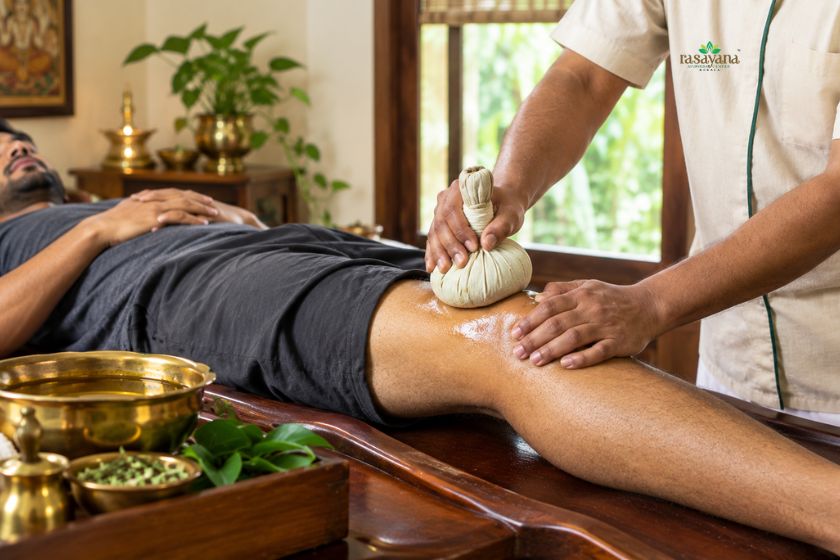
3. Pinda Sweda (Bolus Fomentation)
A mixture of herbal poultices, consisting of medicinal leaf bundles, rice cooked in milk, or sand depending on the particular condition, are heated up and rhythmically placed on the affected area. The process creates heat that serves therapeutic purposes, including anti-inflammatory effects, muscle relaxation, and enhanced lymph drainage. The procedure is usually part of an extended Panchakarma session performed in specialized centers such as Rasayana Ayurveda Center, based on an individual’s body composition(prakriti) and stage of disease.
Panchakarma Therapy for Deep Detoxification
For more serious conditions, such as Amavata and advanced degeneration, Panchakarma therapies, especially Virechana and Basti treatments, are employed to detoxify Ama and reestablish the proper balance in Vata. Basti is viewed as the primary remedy for Vata disorders according to ancient medical texts, and its effectiveness in pain relief and functional impairment management is confirmed by recent clinical studies.
Herbal Formulations – Double the Effect
Internal medicinal administration is done along with the extensive therapeutic procedures. Ayurvedic medicines developed by deep research, incorporate the profound knowledge of ancient sages. By utilizing compositions handed down through generations, these medicines become more effective in treatment. Some of the medicines used in the treatment is as follows:
Yogaraja Guggulu & Mahayogaraja Guggulu - Formulations containing Guggulu, possess strong anti-inflammatory & Vata pacification actions. These are extensively used for degenerative and inflammatory joint diseases.
Shallaki (Boswellia serrata) - clinically proven to inhibit the production of leukotrienes that cause joint inflammation. Several clinical trials have shown that Shallaki can reduce pain, stiffness, and increase the walking distance of arthritic patients.
Ashwagandha (Withania somnifera) - apart from its adaptogenic action, it promotes muscle strength and has exhibited anti-arthritic activity in preclinical studies.
Rasna (Pluchea lanceolata) - an exclusive herb for the treatment of Vata ailments, often used in formulations aimed at treating stiffness in knees & lower limbs.
Guduchi (Tinospora cordifolia) - specially used in the treatment of Amavata due to its immunomodulatory and Ama removal effects.
These medicines are prescribed by thoroughly assessing the individuals body assessing factors such as - age, body constitution, predominant dosha and severity of joint damage. Self-medication with Ayurvedic herbs is strongly discouraged. Dosage and combinations are crucially important.
Clean Diet & Lifestyle – Most Important
Ayurveda lays a lot of importance on Ahara (diet) for treatment of knee disorders. In case of Vata type of knee disorders, cold, dry, and raw foods should be avoided while warm and easy to digest foods are preferred. Cow's ghee, sesame seed and oil, warm soups made of ginger and turmeric, and vegetables cooked using mild spices are some examples.
In case of Amavata, the diet will be much stricter initially. Ama forming foods such as curd, meat, heavy sugar products, and cold milk & dairy products have to be avoided. Fasting or a mono diet called Langhana will be suggested during the acute stage of the disorder. Weight loss is also mandatory. The extra body weight adds up to around 3-4 kg per kilogram of extra weight in terms of strain on the knees during walking. At Rasayana Ayurveda Centre, we give special Ayurvedic treatments for weight reduction along with joint-related issues. Pranayama and Yoga are also done along with other treatments. Some specific asanas that build strength to the muscles of thighs but avoid loading of the joint such as Virabhadrasana , Setu Bandhasana, and certain Pawanmuktasana sets are very effective.
When to Consult an Ayurvedic Physician?
Natural home remedies and pain killers may offer some relief. However, if your pain is affecting your ability to move around, sleep, or perform your daily tasks, then professional help is needed. Similarly, if your symptoms persist beyond a couple of weeks, there is inflammation or warmth around the knee joint, or if you have been diagnosed with osteoarthritis or rheumatoid arthritis, an Ayurvedic programme will be more effective.
At Rasayana Ayurveda Hospital, Kochi – which is accredited by NABH and has over three decades of clinical experience with Dr. V. Madhavachandran serving as its chief physician – patients suffering from knee or joint problems undergo a comprehensive Prakriti test before receiving individualised treatment programmes, which combine the principles of Panchakarma therapy, herbal medications, nutritional advice, and physical therapy. It is not a standardised treatment plan that can apply to all patients. For example, two individuals experiencing knee pain might receive vastly different treatment programmes based on their constitution and the severity of their condition.
Conclusion
Although knee pain is common among older adults, one should not ignore it, there are better options available besides surgical intervention or long-term use of painkillers. When guided by a trained practitioner, Ayurvedic medicine can alleviate pain, arrest joint degradation, and enable the patient to regain his or her mobility. Trust in Ayurveda , Trust in us.
.jpg)
.png)