Our Blogs
Ayurvedic treatments encompass a wide range of therapies and modalities. Here are some of the commonly practiced types of Ayurvedic treatments:
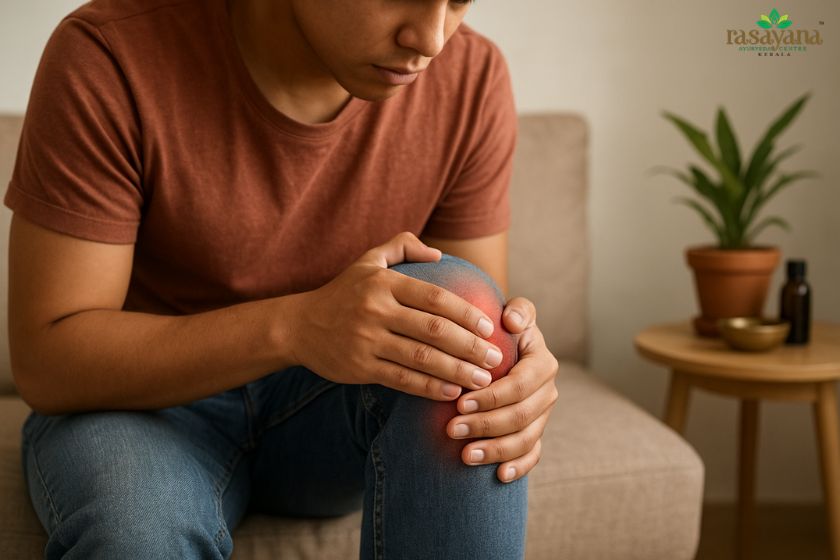
Knee Pain in Young Adults: Ayurvedic Causes and Treatments Explained
Why are young adults facing knee pain so early?
Knee discomfort has slowly become a part of many young adults’ routines. It might show up after sitting too long, or as a tight feeling during small movements like bending down or taking the stairs. Sometimes the joint feels heavy; sometimes it gives a quick pull during a workout. These early signs are easy to ignore because the pain isn’t strong at first, but the joint usually reacts this way when something deeper is out of balance. Long work hours, screen time, irregular movement, and sudden physical strain all play a part. Some even notice it on days that aren’t particularly busy, which makes the issue a bit confusing. But most of the time, the knee has been stressed for weeks before the discomfort becomes noticeable.
What actually causes knee pain?
The reasons are not always severe. Most of them are small habits repeated every day. Even simple routines like sitting with one leg tucked under or standing unevenly can contribute over time.
Common daily triggers include:
- long hours with knees bent
- using stairs often
- rushing into workouts without a warm-up
- standing or walking on hard floors
- carrying weight on one shoulder
- weak thigh or hip muscles
- older sprains that were never treated properly
These patterns continue quietly, so the knee responds slowly but steadily.
Signs that the joint is under strain:
- stiffness after rest
- discomfort while bending
- swelling after activity
- clicking sounds
- heaviness around the knee
- slight loss of stability
These signs often appear before actual pain develops, which is why many young adults feel confused about what’s happening.
Ayurveda goes a step deeper.
It explains knee discomfort through imbalances like:
- Vata going high - dryness & stiffness
- Ama buildup - heaviness around joints
- Weak Agni - poor nourishment to tissues
- Asthi Dhatu weakness - reduced joint support
These factors help understand why the knee reacts even at a young age. Simple habits like eating late, sleeping late, or skipping meals also influence these imbalances more than people realise.
What does an Ayurvedic treatment do for this issue?
Ayurveda examines the entire pattern of a person’s lifestyle, digestion, and daily routine before choosing a treatment. Instead of a single quick method, they combine warm therapies, gentle detox, and nourishment. This approach is slower, but it tends to address the deeper reason behind the discomfort.
Most centres offering Ayurvedic treatment for knee pain use therapies like:
- Abhyanga - warm oil massage that softens stiffness
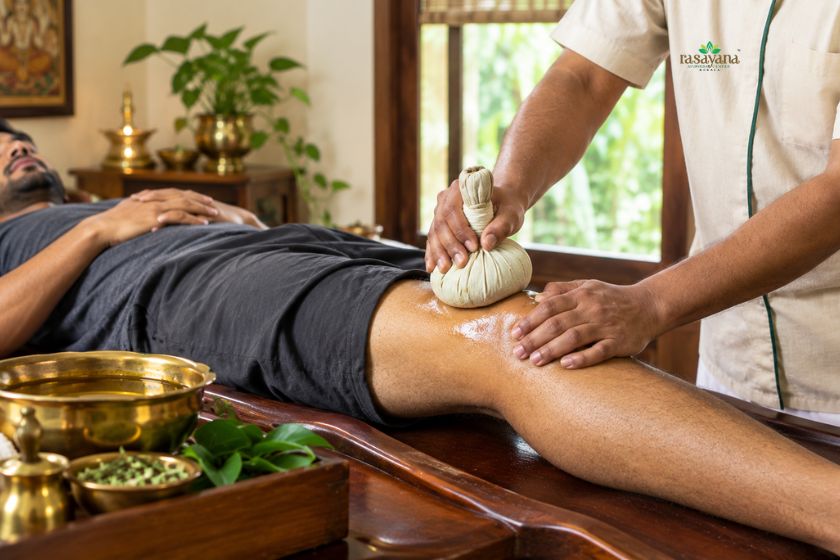
- Janu Basti - warm medicated oil held over the knee
- Kizhi - herbal bags for swelling and mobility
- Lepanam - herbal paste for irritation
- Rasayana support - long-term nourishment for tissues
These treatments are selected based on symptoms and body type, not as one fixed plan.
At RASAYANA AYURVEDA CENTRE, this evaluation is done carefully. The team studies each person’s daily habits, digestion, and activity levels before creating a personalised plan. This ensures the treatment supports the deeper cause of the discomfort. Many find this helpful because it gives clarity about what exactly triggered the issue in the first place.
What improvements do young adults usually notice after this approach?
Ayurvedic care usually brings changes slowly, and these shifts start showing up in everyday movement. People often describe these changes as “small improvements that make the day easier.”
Common improvements people notice are:
- less stiffness when waking up
- easier movement during routine tasks
- swelling settling faster than before
- better balance and stability on stairs
- more comfort during longer walks
- a lighter feeling around the joint
- steady support for bone and joint tissues over time
These changes become clearer when simple daily habits are followed consistently. Warm oil before a bath usually helps loosen the knee a little, and simple leg stretches make the joint feel less tight. Wearing shoes that actually support the foot, taking short breaks when sitting for long hours, and avoiding sudden heavy movements also take some pressure off the knee during the day. Even small posture changes during work can make a noticeable difference.
When these small habits stay consistent, the results of Ayurvedic treatment for knee pain tend to hold better and feel more natural over time. The joint feels less reactive, and the knee manages daily strain more comfortably.
When should a young adult consider seeking help for knee pain?
If the knee keeps bothering you often, makes everyday movements uncomfortable, or doesn’t calm down even after resting, it’s better to check in with an Ayurvedic practitioner to figure out what’s causing it. Early guidance helps identify the pattern behind the issue and prevents long-term strain.
Many people prefer centres with long-standing traditional practices, which is why Ayurvedic treatment for knee pain in Kerala is often chosen for authentic care. At RASAYANA AYURVEDA CENTRE, practitioners focus on understanding the deeper cause and providing structured guidance that supports long-term joint health.
Taking timely steps allows the knee to recover gradually and makes everyday movement more comfortable and stable.
.jpg)
.png)