Our Blogs
Ayurvedic treatments encompass a wide range of therapies and modalities. Here are some of the commonly practiced types of Ayurvedic treatments:
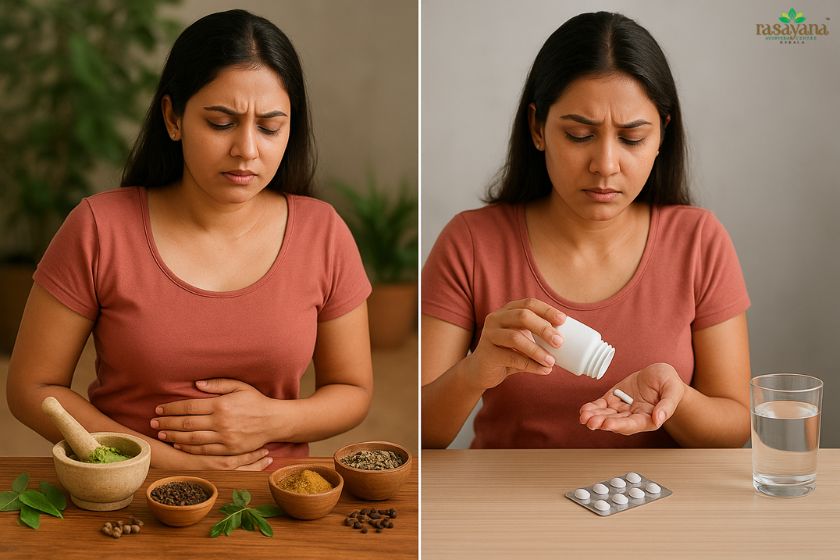
Ayurvedic Treatment for PCOS vs Modern Medicine: Which Is Better?
If you ask a group of women today about PCOS, at least a few will gently say that they’re dealing with it too. It has become surprisingly common, and not because something is suddenly wrong with women, but mostly because life has changed so much. Long hours of sitting, constant stress, eating at odd times, and sleeping even later… Eventually the body reacts. And for many women, PCOS is one of those reactions.
Most of them start noticing small things first. Maybe their periods start drifting away from their usual dates, the skin breaks out more often, and energy dips for no reason. Over time, these little signals add up, and that’s when the search for a reliable treatment starts.
What Exactly Is PCOS Doing Inside the Body?
PCOS shows up differently for each woman. Some find it harder to manage weight, while others struggle with breakouts that don’t settle easily.
Common signs include:
- periods shifting away from usual dates
- unwanted facial or body hair
- weight changes
- thinning hair
- feeling tired often
- sudden mood swings
PCOS isn’t just about physical symptoms it can slowly affect how someone feels about themselves and how comfortable they are in their own body.
How Does Modern Medicine Approach PCOS?
Most doctors first try to stabilise the visible symptoms. Hormonal pills, Metformin, and creams for acne or hair growth are commonly prescribed. And to be fair, these help especially when someone needs quick relief or when symptoms are too strong to ignore. But these treatments usually work as long as the medicines continue. Once stopped, many women slowly see the symptoms creeping back. This leads many to look for a more natural, steady approach.
How Does Ayurveda Look at PCOS?
Ayurveda doesn’t look at PCOS as one separate issue. It looks closely at everyday habits that might be disturbing the body’s balance. Maybe digestion has slowed, stress is high, or routine has been irregular for months, each of these can influence how the body functions.
Ayurveda tries to understand what’s happening together and gently brings the body back into a more balanced, natural state. It’s a gentler approach, but it aims to help everything function together, not in parts.
It describes PCOS as something influenced by:
- Hormonal imbalance
- Irregular digestion
- Metabolic slowdown
- Stress
- Lifestyle disturbances
This is why Ayurvedic treatment often feels slower but more stable. It doesn’t push the body; it guides it back to balance.
What Does Ayurvedic Treatment Usually Include?
One of the strengths of Ayurveda is how personalised it is. What one woman needs may not be what another woman needs.
In Kerala, where Ayurveda has a long and respected tradition, Ayurvedic treatment for PCOS in Kerala often involves a thoughtful combination of:
- gentle detox therapies
- herbal medicines for ovarian health
- food routines to reduce inflammation
- simple daily structure
- yoga and breathing practices
- natural weight-management steps
There’s no rush. No pushing. Ayurveda works with the body’s pace.
Ayurveda vs Modern Medicine - Which One Helps More?
Modern medicine brings fast relief. Ayurveda brings long-term balance. That’s the simplest way to put it.
When symptoms are too strong, modern medicine helps stabilise things quickly. But when the aim is long-term improvement, regular cycles, better metabolism, calmer moods, and a more settled hormonal system, Ayurveda supports deeper healing.
Most women who choose Ayurveda do so because they want their body to function better naturally, not only when medicines are running in the background.
Why Kerala Is a Preferred Place for Ayurvedic PCOS Treatment
Kerala has always been known for authentic Ayurvedic treatments, mainly because the practice here is still connected to tradition. When women choose ayurvedic treatment for PCOS in Kerala, they often mention that the environment itself feels healing. The herbs are fresh, the therapies follow classical methods, and the doctors take time to understand each person individually. It’s not rushed care, it’s personalised care.
How Does the Best Ayurveda Hospital in Kochi Support PCOS Treatment?
Finding the best Ayurveda hospital in Kochi matters because PCOS is not something that disappears in a week. It needs patient guidance.
At Rasayana Ayurveda Centre, the focus is on understanding a woman’s daily life, habits, work timings, sleep patterns, and emotional stress because all these affect hormones. Treatment includes therapies, herbal support, food guidance, and small lifestyle suggestions that fit naturally into daily life. Many women say they feel supported, not pressured, throughout the process.
What Small Habits Actually Help?
Simple habits make a real difference:
- Drinking warm water
- Eating home-cooked meals
- Keeping sleep timing steady
- Including light activity
- Cutting down sugar gradually
- Spending a few minutes calming the mind
These habits often make women feel lighter and more in control.
So, Which Is Better for PCOS?
Both systems help, but in different ways. Modern medicine is ideal when someone needs quick symptom control. Ayurveda is better when someone wants deeper, long-term correction.
For many women, the steady, natural approach of Ayurveda feels more comforting, especially when guided by experienced practitioners like those at Rasayana Ayurveda in Kochi. No single treatment works like magic when it comes to PCOS. The progress may be slow, yet with the right guidance and a routine you can actually follow, living with PCOS becomes much easier. Day by day, the symptoms settle, and life starts feeling more organised.
.jpg)

.jpg)